


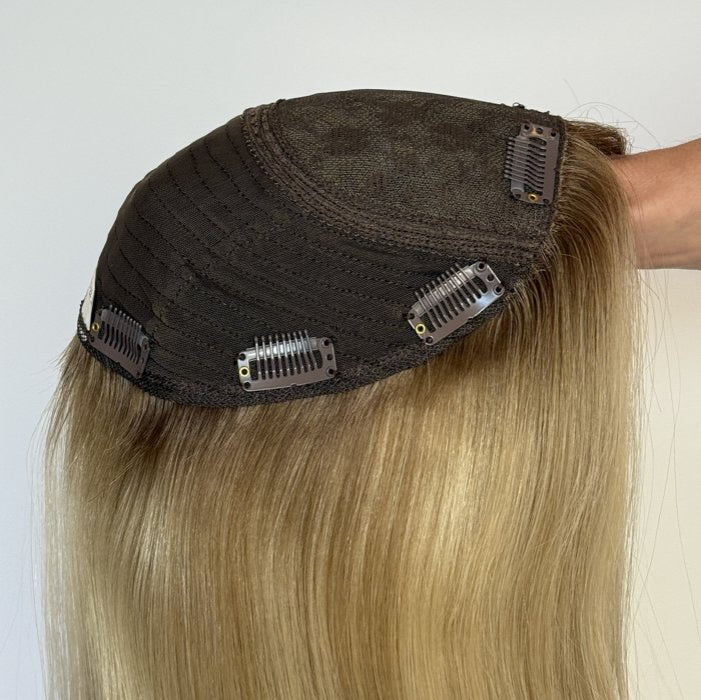
Silk, Monofilament or Lace? Understanding Topper Bases
When women first begin looking at hair toppers, the words silk, monofilament and lace can make the process feel far more technical than it needs to be. These terms simply describe how the base is constructed and how the hair is attached.
The base affects the appearance of the part, the flexibility of styling, the weight of the piece and how the front edge is worn. There is no single “best” construction. The best base is the one that works with your hair loss, your natural hairline, the way you style your hair and the result we are trying to create.
Silk: a softly defined scalp effect
A silk base is designed to create the appearance of hair emerging through a smooth, scalp-like surface. The knots are concealed beneath the top layer, which gives the part a clean, polished finish.
Silk can be a beautiful choice for women who want a very defined scalp appearance through the part and top. The layered construction may feel slightly more structured than a fine lace base, so fit and placement remain important.
Silk bases are often worn just behind the natural hairline, with a small amount of the wearer’s own hair blended around the front for the most seamless result.
Monofilament: natural movement and flexibility
Monofilament is a fine mesh-like material that allows hair to be individually tied into the base. It creates a natural-looking part while allowing the hair to move and change direction more freely.
For many women, monofilament offers a helpful balance between a realistic scalp appearance, breathability and styling flexibility. It can work particularly well when the natural front hairline remains available to blend with the topper.
The exact finish can vary with the colour of the base, the density of the hair and how the part is customised. Those details matter just as much as the material itself.
Lace: lightness and a delicate edge
Lace is fine, lightweight and flexible. Hair is hand tied into the lace so it can create a soft, natural transition, particularly around an exposed edge or hairline.
Because lace is delicate, it needs thoughtful handling and care. It may not be the right choice for every attachment point or every lifestyle, but where a fine edge is needed it can produce a beautiful result.
What is a Swiss lace hairline?
A Swiss lace-front topper and a specialised hairline topper are not the same thing. A standard lace-front topper uses fine lace along the front edge of a larger topper base to create a softer transition. A specialised hairline topper is designed specifically for recession or loss through the front and temple area and is constructed and positioned differently.
Some specialised hairline designs extend into a topper section for coverage through the part and top as well. The correct option depends on whether your main concern is the part, the crown, the front hairline or a combination of areas.
How we choose the right construction
Choosing a base is not something I do in isolation. I look at where the hair loss begins, where the topper needs to sit, whether the natural hairline can remain visible, the strength of the existing hair, the density required and how the finished hair needs to move.
This is where nearly four decades of hairdressing experience become just as important as knowing the technical specifications of a topper.
The construction is only the beginning
Even the most beautifully constructed topper will not look natural if the density, colour, placement, proportion or cut is wrong.
Construction gives us the foundation. The artistry comes in knowing what to do with it.
The piece still needs to be selected in the right size, positioned correctly and customised to work with your own hair. That is where technical knowledge and hands-on hairdressing experience come together.
A simple way to think about it
As a starting point, silk can create a beautifully defined scalp effect, monofilament can offer natural movement and versatility, and fine lace can be particularly valuable where a delicate or exposed edge is required. But these are guides rather than rules. The right construction depends on the complete picture.
Suggested call to action
Explore the cap construction comparison in The Guide, or book a private consultation with the Cosmetic Hair Co. team if you would like expert guidance on which base best suits your hair loss, natural hairline and preferred finish.


Leave a comment
This site is protected by hCaptcha and the hCaptcha Privacy Policy and Terms of Service apply.